Grace Anew?

I love to read. I generally read Christian non-fiction focused on spiritual growth. There are some very popular books out there on the subject and many of the more recent books focus on discipleship and its cost.

The authors eloquently write about self-denial and carrying your Cross as the pathway of discipleship. The assert that we need to crucify self daily. They state that the way of true discipleship is radical, crazy, sold-out devotion to Jesus.

Make no mistake, I agree. Wholeheartedly. Death of self is the way to true, abundant life.

I facilitated a men’s group which studied a couple of these books. They both had DVD curricula and were well-done. The books were very inspirational and motivational. They spurred us all to more. They encouraged us to examine our relatively plush lives and get our priorities straight. We wanted more Jesus. We wanted lives like we had heard about. But after roughly 16 weeks of striving after a higher calling, we were tired and discouraged. The bar had been set so high that it was unattainable. Was this kind of sold-out devotion really possible? We had tried. We had surrendered. Now we weren’t so sure. Looking back, I may have a hint as to the reason why.

The material focused on death of self. We were concentrating of self-denial, carrying our cross, self-discipline, and counting the cost of discipleship (and the cost of non-discipleship). What these books did… what this material did… was put the focus on self. It was designed to do the opposite, but in actuality, put all the impetus on each of us.

What I have experienced recently is a new revelation of God’s love and His grace. I have a new, fresh encounter with the Cross and all that was accomplished there. I am 55 years old and have been a Christian for nearly 20 years. But I am astounded by what I have found. I am amazed by this discovery. I am totally and completely overwhelmed by it. By focusing on Jesus and His finished work on the Cross, I have found that I am completely surrendered… completely devoted… radically sold-out in a crazy way.

Death of self has taken place, but not through any curriculum or book, not through studying more or praying more or fasting (although those are all good things), and not through trying to deny myself. IT JUST HAPPENED! It was a natural byproduct of this discovery of the supernatural, finished work of Jesus. It is an automatic response to His amazing love for me (and you). I didn’t have to try to surrender. There was no striving. I am just completely, totally in love with Jesus. He’s the first person I think of when I awaken. He consumes my thought during the day. He’s who I think of as I go to bed.

The apostle Paul says:

My old self has been crucified with Christ. It is no longer I who live, but Christ lives in me. So I live in this earthly body by trusting in the Son of God, who loved me and gave himself for me. I do not treat the grace of God as meaningless. For if keeping the law could make us right with God, then there was no need for Christ to die. (Galatians 2:20-21)

I’m not sure Christians treat the grace of God as meaningless as Paul says in verse 21. We certainly sing about it enough and talk about it enough. We read about it and we know we are saved by it. But how is it that it can become fresh and new again to me? How is it that I can be totally changed by it all over again… and seemingly more deeply and profoundly!?! Could it be that each of us need to encounter grace all over again? Could it be that we need to see afresh all that was done on the Cross and experience His grace and love anew?

The Only Equation That Matters

I’m a control-freak. I know it. I don’t like it, but I know it. I prefer to think that I like my life “structured”. It’s manageable. It’s predictable. It’s controllable that way (oops, there’s that word).

I like mathematics, too. I like equations. I didn’t do well in algebra, but I still like equations. I especially like the equal sign. I like the fact that 2a + b = c, or whatever the equation happens to be.

I like science, too. I like cause and effect. If _______ happens, then ________ happens. It helps predict how things will work. Again, it’s something I can control and manage. And I like it. Did I mention that?

I was informed several years ago that children of alcoholics like highly structured lifestyles. I am a child of an alcoholic (actually of two) and I’m living proof that is true. Experts says that because the alcoholic’s life is so unpredictable and sometimes volatile and chaotic, their children crave structure and predictability. My dad was a good provider but had a volatile temper (it’s where I get mine) and the only thing you could really predict growing up was that he would have plenty to drink. My mom loved me very much, but after my parent’s divorce, would drink herself to sleep. Again, that was one thing you COULD count on.

So fast forward to adulthood and I’m a control-freak. In some ways I like that: I’m organized, I’m prepared, and I’m a planner. In some ways I don’t like it: when things are chaotic or noisy, it drives me crazy. Really crazy.

This carries over into my spiritual life. Again, I want predictability. I crave structure. I like Bible-reading plans. In January, I just finished one. I like the “spiritual disciplines”. They are structured and are designed to help train you in righteousness. However, to me, self-discipline becomes self-righteousness. My thought process becomes: “If I pray enough (or properly) or read enough or serve enough, then I become righteous, or more righteous.” It’s cause-and-effect, right? That’s why I can be legalistic. If I do ______, then I know where I stand with God. It helps me measure. It helps me predict. Worse yet, it makes me think I know where others stand with God. It makes me measure. It makes me predict.

However, I’ve discovered something that you probably already know. At least we THINK we know it. It’s this: There’s nothing else you need to add to the shed blood of Jesus Christ to get right with God or be right with God. Nothing. He is everything you need to be righteous. He is everything you need to be holy. The spiritual disciplines of prayer, fasting, Bible reading, meditation, giving, and so forth help you know God more. They are means of growing the character of Jesus within you. They are not “Five Easy Steps to Righteousness.” They are not the things you MUST do in order to grow in Christ. Instead, they are things you feel compelled, called or drawn to do once you realize everything that Jesus has given you. There IS a difference.

It is radical. God’s grace and His love are radical. Once you experience them — REALLY experience — you will be transformed. They have the power to break every chain that binds. They have the power to set the captive free. His grace and love have the power to heal every wound. They have the power to restore and heal marriages and relationships. They bring amazing freedom. God’s grace is radical.

God’s grace is EVERYTHING. That is the Good News.

Here’s an equation to remember: JESUS + NOTHING = EVERYTHING.*

*Although I’ve never met him, I owe a debt of thanks to Pastor Tullian Tchividjian for a book entitled by that equation and for another book, One Way Love: God’s inexhaustible Grace for an Exhausted World. God has used them to set me and so many others free in so many ways. Check them out HERE or visit Liberate.org.

Life before death?

Eternal Life.

Think about those two words for a minute. How would you define them?

Kingdom of God.

Again, what do you those three words mean to you?

Many Christians would say that eternal life is what happens after they die. A life in heaven. And they would be right.

Many Christians would say that the Kingdom of God is where they will reside after they die. And they would be correct.

But there is so much more to eternal life in the Kingdom of God! The moment we come to trust God with our lives, placing our trust in the shed blood of Jesus, who took our sins upon Himself in the most blessed exchange ever to cleanse us and give us His righteousness, we are given the gift of eternal life. But this isn’t just life after death. He doesn’t just save us and then meet us again after we die. There is so much more!

Jesus Himself said, “The Spirit of the Lord is upon me, for he has anointed me to bring Good News to the poor. He has sent me to proclaim that captives will be released, that the blind will see, that the oppressed will be set free, and that the time of the Lord’s favor has come.” (Luke 4:18-19, NLT)

Does that sound like He came to just give us a ticket to heaven? No, He came to give us eternal life NOW. It should be called “eternal living” because we are given God’s Spirit, the Holy Spirit, who lives inside us leading us, guiding us, teaching us, and even chastising us as we live out this life of freedom. We are free from trying to do everything right, because Jesus did everything right. We are free to fail, because Jesus succeeded. We are free to lose, because He won. We are free to be weak, because He is strong. We are free from having to perform, because all the work has been finished. This is true freedom.

Living in the Kingdom of God is not something that just happens after we pass away. Kingdom living happens (or can happen) every moment of every day. It is not a state of mind but a state of being. It is both a conscious decision and a surrendered condition. It is a place of trusting in the sovereign King of the universe, knowing that He is aware of all that is happening, and that He is using it all to grow us and shape us to be more and more like Jesus. It is a condition of living that brings true freedom and joy. Because we reside in this Kingdom, we are able to trust God for all our needs. Therefore, it is a place where the focus is no longer on ourselves but on God and others. This is abundant life (John 10:10). This is living in the Kingdom of God.

And this is tremendous news to a watching world which is looking for hope and searching for the one and only strategy for successful living. This is it! If you are a Jesus-follower, you have found it! We only need to start living like it.

Shane Claiborne said,

“Few people are interested in a religion that has nothing to say to the world and offers them only life after death, when what people are really wondering is whether there is life before death.”

Eternal living. Kingdom living… Good News indeed!

Cut Yourself Some Slack

I was meeting with a guy some time ago who said he wanted his spiritual life to grow. He wanted to get serious about his spirituality but felt stuck in neutral, so to speak. He was frustrated by his apathy and wanted to take following Jesus to the next level.

My mind immediately began to go into action as he was talking, thinking of ways he could increase the intensity of his devoutness (is that even a word??). I thought of ways he could pray more. I thought of ways he could dig into God’s Word. Maybe a Bible-reading plan would help? I thought that sometimes the best way to break out of a funk is to serve others… how could he do that? Thankfully, in that flurry of thought, I caught myself.

I told him first, “Cut yourself some slack. I’ll bet you are very hard on yourself.” He said he was. It stemmed from his early years in his childhood church and how he learned to follow Jesus growing up. I continued, “God knows your heart. He knows right now that you’re talking to me about knowing Him more deeply. He knows you have that desire. I know He is smiling about that right now. You are not as apathetic as you think or you wouldn’t be having these desires. Cut yourself some slack.”

All of us so easily fall into a trap of measuring our own righteousness. We measure it by how much we pray. We measure it by how much we read our Bibles. We measure it by our behavior day-by-day. We measure how we talk, what we drink, and even by how much or what we eat. We measure ourselves against others. But when we measure, by definition, we are self-righteous. We become legalists. We become like the Pharisees in Jesus’ day.

Our righteousness is found only in Christ. It is not found in what we do, it is found in what He has already done. As God’s Word says:

All of us have become like one who is unclean, and all our righteous acts are like filthy rags; we all shrivel up like a leaf, and like the wind our sins sweep us away. (Isaiah 64:6, NIV)

For the Kingdom of God is not a matter of what we eat or drink, but of living a life of goodness and peace and joy in the Holy Spirit. (Romans 14:17, NLT)

That is why we need a Savior.

As our meeting ended, I asked my friend to read a book that set me free from this trap. It’s by Billy Graham’s grandson, Tullian Tchividjian. It’s called “One Way Love”. It has been eye-opening and life-changing. I highly recommend it.

The Gospel has come to set us free from the trap of performance-ism. We don’t have to work to please God. When we think upon Him, even just desiring to know Him more, I know it pleases Him.

I know He smiles.

(To find out more about this transforming encounter with God’s grace, read “One Way Love”, available at your favorite bookstore or at Amazon.com HERE.)

Another Way?

Yesterday, a friend of mine sent me an email which said:

“Chapter 2 in the book (Tullian Tchividjian’s God + Nothing = Everything) talks about the everything that we had in the beginning and everything that we will have in the end, and makes the statement,  ‘Between Genesis 1 and the last pages of Revelation, there unfolds an epic story marked by incalculable tragedies…’

“I agree with the above, but want to relate a question posed to me by a missionary turned atheist: Given the great epic of tragedies, suffering, etc., couldn’t God in all his wisdom have done it another way? How would you answer him?”

Here’s how I responded:

“My wife and I talked about this somewhat. She made the best point possible:

“‘Yes, God could’ve found another way, but in the process, would’ve taken away our choice.’ We chose poorly and the ‘epic tragedies’ began. God gave us the freedom and, in the beginning (before sin), the Kingdom. We chose wrong and have been choosing wrong ever since. That is why we needed a Savior.

“I would say your missionary-turned-atheist friend has had an epic tragedy in his own life, and because of his choices or someone else’s choices (possibly his church or denomination), he suffered greatly… to the extent that he couldn’t persevere in his faith.

“As my wife said, ‘We make it difficult. It’s really quite simple. We try to blame God for everything (or question everything), when we’re the ones we should be blaming.’ She’s a wise lady.”

Some may think that’s an over-simplification, but I’m not so sure. Yes, there are seemingly random tragedies in this world – car accidents, for instance. But in the very beginning, our ancestors chose wrongly, and the tragedies began. Sin, disease, death, and decay all began with the Original Sin.

Jesus came to redeem it all, and although the time for complete redemption has not quite come, it is coming soon. He is coming soon.

For the sin of this one man, Adam, caused death to rule over many. But even greater is God’s wonderful grace and his gift of righteousness, for all who receive it will live in triumph over sin and death through this one man, Jesus Christ. Yes, Adam’s one sin brings condemnation for everyone, but Christ’s one act of righteousness brings a right relationship with God and new life for everyone. (Romans 5:17-18, NLT)

Against its will, all creation was subjected to God’s curse. But with eager hope, the creation looks forward to the day when it will join God’s children in glorious freedom from death and decay. (Romans 8:20-21)

Forgiven much…

In Chapter 5 of his book, The Good and Beautiful Community, James Bryan Smith talks about “The Reconciling Community”, one which forgives readily and lives healed, healthy lives. He expounds on The Parable of the Unmerciful Servant.

You may know the story: The servant has a huge debt that he owes his master, and the master tells him that he’s going to lock up the servant and his entire family until he can pay the debt. But the servant pleads for mercy and the master relents and gives him more than he deserves: freedom. Free from debt and freedom from being a servant any longer.

Then the forgiven servant immediately goes to someone who owes him money and, instead of paying it forward, he demands repayment. The master hears of this atrocity and brings the forgiven servant back, reprimands him and throws him and his family back in jail to be tortured. The lesson is simple for us: Because we have been forgiven, we should forgive. (See Matthew 18:21-35)

But James Bryan Smith points out two things:

First, we don’t forgive to feel better. We are told that if we would just forgive, it would help us heal. But forgiveness is not therapy. In some situations, it seems impossible to forgive. That’s because it is — in our own power. We can’t will ourselves to forgive.

Because of the work on The Cross, we have been healed. We have been forgiven of our sins and all the collateral damage that sin brought into our lives. From that healing – in Christ – we have the power to forgive. We forgive from our healed hearts. We don’t forgive to be healed. We are healed and therefore, have the power to forgive.

His second point is where the healing comes from, at least for me. In the story above, the unmerciful servant was originally forgiven a HUGE debt. He could have worked the rest of his life and still not paid the debt. The debt was huge and he got more than the debt being wiped clean… he and his family were given their freedom!

In comparison, the debt of the one who owed this servant money was miniscule. James Bryan Smith points out that the first debt is over 600,000 times larger than the smaller debt.

Meditate on that for a moment. The things that we have been forgiven of (and that we will be forgiven of in our lifetime) are overwhelmingly huge. As James Bryan Smith says, “The point is clear: we have forgiven for so much more than we will ever be called on to forgive.” But not only has the slate been wiped clean, we get the Kingdom, too!

This is not be glossed over. This is a point to be pondered and internalized. And this is where the power to forgive comes from. As we get this narrative deep down within us, we receive healing and out of that healing, we find the power in Christ to forgive.

This does not minimize the deplorable things that have been done to you and me, whether it be adultery, sexual abuse, rape, or even the murder of family or friends. But as you and I meditate on how much we have been forgiven, we find the grace we need to forgive.

Get rid of all bitterness, rage, anger, harsh words, and slander, as well as all types of evil behavior. Instead, be kind to each other, tender-hearted, forgiving one another, just as God through Christ has forgiven you. (Ephesians 4:31-32)

It really IS finished!

Do you know that God holds nothing against you? Maybe this is old news to you. For me, this is a revolutionary idea.

For me, I was constantly trying to get back into God’s good graces, like I would any other relationship from childhood to adulthood. Addicted to the approval from others, I would always try to earn it. Do enough and I was good; not do enough (or worse, rebel), and I would have to work to get myself back into favor. This process carried over into my relationship with God, although I never really realized it until a few months ago. I talked about God’s grace and was certainly thankful for His forgiveness, but every time I screwed up, I would work at getting back to where I need to be. Pray more, read more, serve more. It was subtle, but it was – subconsciously – my mantra. “I really would need to put my spiritual life ‘on the front burner'” or feel like “I need ‘to step it up’ in my spiritual life.” These would be my thoughts. Maybe you’ve had them too.

Now, I have come to realize that Jesus’ words are really true. “It is finished” (John 19:30) applies not only to Jesus’ lifelong journey to the Cross, or to the fact that the requirements of the Law had been fulfilled, but also that all work has been finished to bring you and I back to God. We can now come to God without fear or worry of punishment. We don’t have to work to get back into God’s good graces. Listen to these words by the apostle Paul:

And all of this is a gift from God, who brought us back to himself through Christ. And God has given us this task of reconciling people to him. For God was in Christ, reconciling the world to himself, NO LONGER COUNTING PEOPLE’S SINS AGAINST THEM. And he gave us this wonderful message of reconciliation. (2 Corinthians 5:18-19, NLT, MY EMPHASIS)

James Bryan Smith, author of The Good and Beautiful Community says:

“This is a clear explanation of the finality of the cross. God – in Christ – is not counting our sins against us. God stopped counting and apparently never took it back up. God is no longer dealing with us on the basis of our sins but of our faith. Jesus died for all the sins of all the people for all time — and that means you.”

Do see why Paul calls it a “wonderful message of reconciliation”? Do you see why it’s called the Good News!?!

It really IS finished!

So much it hurts…

I have a friend and co-worker who is also a mom to a 7-yr old. Although she’s busy, she always has time for her son. He has all a son could want: a mom and dad who love him very much.

She was agonizing over a disciplinary decision she was going to have to make with him. She was trying to decide whether to keep encouraging her son to persevere through some adversity or to just pull him out of the situation altogether. She (and every mom like her) just didn’t want to make a bad decision. She didn’t want to screw up. She even said, “I just don’t want to screw him up.”

She had her own thoughts. I offered my advice and said, “You’re a good mom. Your son has all a son could ever hope for and that’s a mom who loves him so much it hurts. Just keep on loving him. That’s the best thing you can do.”

“… love him so much it hurts.” It made me think of God. If we love our children so much it hurts, how much more does God love us? How much did it hurt God to send His own Son to die for us? He must love us so much! So much it hurts!

Happy Mother’s Day to all the moms out there, especially to my wife, Sharon… a great mom. Just keep on loving your children. It’s the best thing you can do.

That’s what God does… no matter what.

Thankful for the Blood..

No original words this morning, just lyrics:

“O The Blood” Lyrics
by Gateway Worship | from the album God Be Praised

O the blood
Crimson love
Price of life’s demand
Shameful sin
Placed on Him
The Hope of every man

O the blood of Jesus washes me
O the blood of Jesus shed for me
What a sacrifice that saved my life
Yes, the blood, it is my victory

Savior Son
Holy One
Slain so I can live
See the Lamb
The great I Am
Who takes away my sin

O the blood of the Lamb
The precious blood of the Lamb
What a sacrifice
That saved my life
Yes, the blood, it is my victory

O what love
No greater love
Grace, how can it be
That in my sin
Yes, even then
He shed His blood for me

Utterly Undone

If you do something right or something admirable, you are rewarded or praised for it.

If you do something wrong or disobey, you are punished.

That is the narrative we all have been raised with since we were children. Good behavior gets rewarded. Bad behavior gets punished. That’s justice. That’s how the world is supposed to work. That’s the law in action. It’s neat and clean and controllable. If _____, then ______. It’s what science is built on. Laws of physics. Laws of nature. It’s explainable and it makes sense.

Then comes grace.

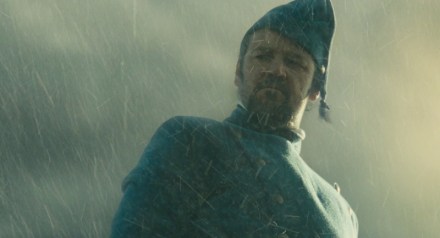
In Chapter 8 of Tullian Tchividjian’ book, One Way Love, it reminds us of the fabulous story in Les Miserables. Whether you’ve seen it on Broadway or watched the screen adaptations, you know the story. Javert, the unrelenting, rigid inspector tells Jean Valjean as he gets out of prison that he will always be a criminal and when Valjean breaks his parole, Javert spends the rest of his life hunting him down like one. Although encountering Javert under assumed identities, Jean Valjean always treats his pursuer graciously. Inspector Javert is consumed to bring Valjean to justice. In the stage version, he even sings, “Mine is the way of the law.” Here’s what Tullian says:

“Valjean refuses to play by the same rules of quid pro quo, going so far as to be gracious with Javert in their several encounters. Valjean’s treatment of him haunts and radically disorients Javert. In the climactic scene, instead of doing away with him once and for all, Valjean saves Javert’s life. Javert is utterly undone by this unexpected act of mercy.”

“Utterly undone.” That is one of the best descriptions of what grace can do. Yes, it can completely wipe away and “undo” my past sins, but that is only the factual part of it. However, when the reality of grace really hits me, and I mean REALLY hits me, I am utterly undone.

All the performance-based rules of how I am supposed to behave our thrown out the window. I am free of them. Now, when I’m good, I am loved and rewarded. When I’m bad, I am loved and rewarded (by grace!). Don’t get me wrong: This doesn’t mean I want to go out and misbehave or disobey. To the contrary. Because I am completely and utterly undone, I now am completely and utterly in love with Jesus. I have no desire to misbehave or disobey. I am compelled to live totally for God.

God’s love, shown by His radically disorienting grace and mercy has the power to move mountains. I have seen it set people free from seemingly impossible bondage. I have seen husbands and wives reconcile when all was seemingly lost. Shoot… it has radically transformed me at the age of 55! All because of His “one-way” love.