The Only Hope…

While reading my Bible and Charis: God’s Scandalous Grace for Us by Preston Sprinkle, I was thinking, and actually became overwhelmed. I am distraught and dismayed because I am becoming more and more aware of how sinful I really am. Seriously. I am SO selfish. I don’t naturally think of others first. I think about what I have to do. I think about my agenda first.

I am depraved. My mind wanders. I have trouble “setting my heart on things above”, as Colossians 3:1 says I should. My heart constantly wanders off course, settling on earthly, temporary things.

I find this somewhat astounding because I purposely try to surround myself with the things of God. I wake up each day and think about God. I ponder and study His Word. I memorize Scripture from time to time. I journal occasionally. I listen to Christian music (for the most part). And, of course, I faithfully go to church.

My little Christian checklist doesn’t seem to work.

I even work for a Christian non-profit organization and am surrounded by wonderful, godly people, also passionate for the things of God. We, along with the Body of Christ, serve the needy and as needs are met, God transforms lives. I witness that first-hand.

And yet, here I am, amazed at my depravity.

This is not false humility. I genuinely echo Isaiah in the temple of God, “Woe to me! For I am a man of unclean lips!” (See Isaiah 6:5) And like the apostle Paul, I cry out:

What a wretched man I am! Who will rescue me from this body that is subject to death? (Romans 7:24)

If I had to venture a guess, I’d say you’re not much different.

Thankfully, this question doesn’t have to hang in the air hopelessly, because Paul answers it immediately:

Thanks be to God, who delivers me through Jesus Christ our Lord! (v.25a)

Do you hear the relief in those words? Do you see the exclamation point at the end of the sentence!?! It’s also Paul’s words in 2 Corinthians, Chapter 12 that give me more hope when he, with the Lord’s help, gets a revelation (the lightbulb comes on) about his “thorn in the flesh”.

Many scholars have spent considerable time theorizing on Paul’s thorn and what it might have been. Some have even supposed that it was his poor eyesight or that he was somewhat meek in stature. Somehow, I don’t think that was his “thorn.” Paul was possibly the most mature Christ-follower this planet has ever seen, so I don’t think he would have referred to a God-given malady, like poor eyesight, as “a messenger of Satan.” (2 Cor 12:7)

Although we’ll never know this side of heaven, I believe Paul’s struggle was more of his “inner life.” He, like all of us, struggled. He was faced with his sinfulness, but most of all, with his weakness. But because he knew he couldn’t handle “it” alone — whatever “it” was — he knew it was an opportunity for Jesus to shine and show Himself.

Therefore I will boast all the more gladly about my weaknesses, so that Christ’s power may rest on me. (2 Corinthians 12:9b)

For me, that gives me hope.

It’s not about who I am nor what I am becoming.

It’s about who Jesus is and who (or what) He became for me and you.

God made Him who had no sin to be sin for us, so that in Him we might become the righteousness of God. (2 Corinthians 5:21)

Therefore, there is now no condemnation for those who are in Christ Jesus (Romans 8:1)

And finally:

That is why, for Christ’s sake, I delight in weaknesses, in insults, in hardships, in persecutions, in difficulties. For when I am weak, then I am strong. (2 Corinthians 12:10)

The Glory of God

“If I knew then what I know now.”

How many times have you said that? How many times have I? Many, many times.

Hindsight is 20/20 is how the saying goes. It’s true; if you have eyes to see, that is.

The entire church prayed many, many times the words of John 11:40. We prayed for the Lord to show us His glory. If I would just believe, I would see His glory. That’s what the verse said. I didn’t really know what I would see if I did see His glory. What would it look like? Would I know it if I saw it? What would it require of me? More faith?

I didn’t see it for a year and a half. I felt like I didn’t believe enough. No glory; therefore not enough faith, right? Through a series of events, I had to leave that church. I had been there for 15 years, but I had to leave for reasons that are irrelevant now. What matters is what happened as a result.

Out of the tragic departure from a church I loved so dearly came heartache, many, many tears, broken dreams and shattered promises, and even anger. But through this season came a new perspective. From the ashes came beauty. Through the teaching and counsel of a great pastor at my new church — Brandon Williams — God gave me a fresh perspective of His love.

This is no small thing.

This was – and is – monumental. It changed (and changes) everything. It provided (and provides) a new freedom, a new lightness, a new trust, and a new passionate love for Him who first loved me.

Pure and simple, this was God’s glory shining into my life. This is what I had longed for! This is what I had agonized over in fervent prayer! Through hardship and adversity and heartache, God’s glory was (and is) seen.

I’m not sure I can explain God’s glory, but I know it when I experience it.

Then Jesus said, “Did I not tell you that if you believe, you will see the glory of God?” (John 11:40)

Drowning

Have you ever taken a water safety course with lifesaving skills? The instructors teach you skills that they would teach a lifeguard. I was thinking about these skills and instructions when I read a headline about a drowning.

You’ve probably heard that when you jump in the water to save someone from drowning and swim to the scene, you spin them around with their head above water and their back facing you. Then you pull them, swimming back to dry ground, with your arm wrapped under their chin.

Sounds easy, right? I’ve never had to use those skills, but I can imagine that it would NEVER be easy. The most common obstacle in saving someone who is drowning is the person themselves. Normally, experts say, when you arrive on the scene, the drowning person is flailing away, trying desperately to keep their head above water. In their desperation to save themselves, they drastically hinder the efforts of the lifeguard. It’s only when they are disarmed, that the lifesaver can pull them to safety.

So it is with our spiritual lives. It’s only when we come to the end of ourselves that we realize the need for the Savior. It’s only when we stop our flailing that our Lifesaver is able to save us. It’s only when we stop trying to save our self that the One who can save us can do what He came to do: seek and save the lost. It’s only when we realize that we are drowning that we can allow the Lifeguard to save us.

This not only applies to our initial encounter with God’s grace, mercy, and salvation, but also to our everyday walk with God as Jesus-followers, allowing the Holy Spirit to have His way in our lives. It’s only in weakness that God shows His strength. It’s in adversity when God gets to show His glory. Again, it’s when we realize that we are drowning without Him that He can rescue us. It’s only when we allow Him to have His way that He can show us who He truly is.

All our own efforts can’t. All our flailing can’t keep our head above water. Believe me; I know.

We can only be rescued when we allow Him to wrap His arm around us and pull us to dry ground.

“My grace is enough; it’s all you need. My strength comes into its own in your weakness.” (2 Corinthians 12:9, The Message)

When you pass through the waters, I will be with you; and when you pass through the rivers, they will not sweep over you. When you walk through the fire, you will not be burned; the flames will not set you ablaze. (Isaiah 43:2)

Consecrated…

Day 3…

As I read through today’s Draw The Circle devotional, Mark Batterson talked about consecration. Consecration, as he put it, is death of self. It is a lifelong journey of surrender in total dedication to God. It is the process of not holding anything back from God.

As Batterson puts it:

“I know there is a fear that if we give more of ourselves to God, there will be less of us less, but it’s the exact opposite. It’s not until we die to ourself that we truly come alive. The more we give to God, the more we have and the more we become. It’s only in losing our lives that we truly find them.”

He tells of great men God like Dwight L. Moody and Jonathan Edwards who, when fully dedicated to the Lord, did amazing things for God during their lives. He tells the story found in Joshua where the Lord tells the Israelites to “Consecrate yourselves, for tomorrow the LORD will do amazing things among you.” (Joshua 3:5) They did; and the Lord did: He parted the Jordan River and crossed on dry ground.

But I found myself bristling against some of what he said. For instance, the very last sentence of today’s devotional reads:

“If we give more of ourselves to God, God will give more of Himself to us.”

God gave all of Himself when He gave His one and only son, that whosoever would believe in Him would not perish but have everlasting life. (John 3:16) How much more can He give!?! It also sounds like a formula for performance. The more we give = the more we get. There’s something about that which is true. But there’s something that’s not quite right, too.

What about those that struggle? You and I have issues. Face it. We do. We all are sinners. Each day. Every day. I am desperately in need of God and His grace. With the formula above, I could easily believe that if I fail at giving God my all today, or if I give something to him one day in complete surrender and then take it back the next day, I’m a complete loser and a total failure. There are thousands of folks walking around believing that today. Thousands.

Because Jesus succeeded, we can fail.
Because Jesus surrendered, I can fall short in my surrender and not feel like a loser.
Because Jesus won, I’m free to lose.

When I fully grasp the freedom found in Jesus and what was accomplished on the Cross, I am humbly compelled to live my live wholly and completely for God. It’s isn’t a matter of me willingly surrendering. It’s not a matter of the will. It’s not about me. It’s about Jesus… and surrender just happens.

Yes, it is still a process. But, for me, it is not a process of surrender, it is a process of fully realizing the love God has for me in Christ Jesus. As I fully comprehend this complete, satisfying, all-encompassing love that heals all wounds and fills all voids, I find myself more and more completely consumed by His love… and more and more completely in love with Him.

I become more and more completely His. If that’s being consecrated, then so be it.

And be thankful…

Let the peace of Christ rule in your hearts since as members of one body, you were called to peace. And be thankful. (Colossians 3:16)

From time to time I’ve seen posts on Facebook entitled “30 Days of Gratitude” or something similar, and each day the person posts something they’re thankful for.

I was reminded of that as I remembered the verse above. “And be thankful,” the apostle Paul says. Why? Why should we be thankful? Why do people post on Facebook something they are grateful for each day?

In his devotional book, Hidden In Christ, James Bryan Smith gives a couple of reasons why we should and some reasons why some folks believe they should.

For instance, are you among those who believe that God is mad at you if you aren’t thankful? Smith gives the example of how we raise our children. When our children receive something, we say to them, “What do you say?” At times, we transfer that thinking to our God, believing that He is looking down at heaven screaming at us, “What do you say?!?” As Smith points out, God is complete in Himself. He doesn’t need anything. He loves us genuinely and with pureness of heart. He requires nothing in return. After all, “while we were still sinners, Christ died for us.” (Romans 5:8)

Secondly, Smith says, sometimes we mistakenly believe that thankfulness is the “secret ingredient” to prayer, which sways God to answer. We are told to “enter His gates with thanksgiving…” (Psalm 100:4) and “in everything, by prayer and petition, with thanksgiving, present your requests to God.” (Philippians 4:6) However, if we think we can manipulate God, we are missing the point.

No, as the folks who post on Facebook would probably tell you, when you count your blessings, when you find things to be thankful to God for, and when you look at life closely and discover little (and big) things to be grateful about, life begins to come alive, so to speak. Your attitude changes. You begin to savor every day, not taking anything for granted, as you and I sometimes do.

As we see every day through the news and elsewhere, we are not guaranteed tomorrow. Life can change in the blink of an eye. Our loved ones here today can be gone tomorrow.

Savor this day. And be thankful.

Holy love meets holy fear

I have a friend that I’m praying for this morning. He is struggling in his faith. He is struggling with apathy toward the things of God. He wants more but he doesn’t know how to get there. He wants God to light a fire in him. He says he doesn’t really have any besetting sin in his life, any sin that he seems to fall into time after time. He just seems stuck in neutral, he says. Sound familiar? It does for me.

I was in that place recently. It took a fresh encounter with God’s love to show me the meaning of His grace toward me (and you) that drew me to Him and ignited a flame within me to tell others about it. I want to tell everyone about the finished work of the Cross and the true freedom found there. I’ve been posting about it for weeks. You can read more at FaithOnTheRoadAgain.com. But back to my friend…

I have him reading some things, hoping he’ll have a fresh encounter with God’s love, too, but he wrote to me after reading a chapter and he said that he thought he had full, mature understanding of the grace of God. Instead, what he thought he needed was a healthy fear of God. I’m trying to discover what he meant. I just sent him an email asking him, telling him that I’m praying for him. Thirty seconds later (literally!), he sends me one, saying that he’s praying for me! I love how God works!

Anyway, I wonder what “fear of God” means to him. Does he want to be “scared straight”? Does he need “shock therapy”? Or does he need a full revelation of the fullness and awesomeness of God? How do you get to the place of being filled with holy reverence and awe toward God, which would define a “healthy fear of God”?

Could it be that what he and I are talking about are the same things? Could it be that a full revelation of the love and grace of God toward me, you, and the rest of humanity is the same thing as the “fear of God”? Most people would think not, but I’m not so sure this morning.

As I watch the amazing colors of the sunrise this morning, I’m reminded that His mercies are new every morning. That’s what the Bible tells us. I turned to that passage in Lamentations. Its author, the prophet Jeremiah, is grieving over the destruction of his beloved city, Jerusalem. It lies in ruin. Here is what he says:

He has walled me in so I cannot escape; he has weighed me down with chains. Even when I call out or cry for help, he shuts out my prayer. He has barred my way with blocks of stone; he has made my paths crooked. Like a bear lying in wait, like a lion in hiding, he dragged me from the path and mangled me and left me without help. He drew his bow and made me the target for his arrows. He pierced my heart with arrows from his quiver. I became the laughingstock of all my people; they mock me in song all day long. He has filled me with bitter herbs and given me gall to drink. He has broken my teeth with gravel; he has trampled me in the dust. I have been deprived of peace; I have forgotten what prosperity is. So I say, “My splendor is gone and all that I had hoped from the Lord.” I remember my affliction and my wandering, the bitterness and the gall. I well remember them, and my soul is downcast within me. (Lamentations 3:7-20, NIV)

Sounds like a terrible state to be in. He is so grieved by his situation (the situation of the exiled Jews and their beloved city) that it seems like he can’t even pray, or that God is simply not listening. But then something changes:

Yet this I call to mind and therefore I have hope: BECAUSE OF THE LORD’s GREAT LOVE, we are not consumed, for his compassions never fail. They are new every morning; great is your faithfulness. I say to myself, “The Lord is my portion; therefore I will wait for him.” The Lord is good to those whose hope is in him, to the one who seeks him; it is good to wait quietly for the salvation of the Lord. (Lamentations 3:21-26, NIV, MY EMPHASIS)

Who are we, that God is mindful of us? That’s what David said when he wrote the Psalms. That’s what Jeremiah is pondering here. More than that, God loves us so much that, despite our failings… our pride… our sin… our apathy… He doesn’t consume us. Sounds like a holy fear of the Lord.

He is compassionate. So compassionate, in fact, that He sent His Son to take our place. We should bear that penalty. We should be punished. God’s love saves us.

Holy love meets holy fear.

I’m praying.

Thankful for the Blood..

No original words this morning, just lyrics:

“O The Blood” Lyrics
by Gateway Worship | from the album God Be Praised

O the blood
Crimson love
Price of life’s demand
Shameful sin
Placed on Him
The Hope of every man

O the blood of Jesus washes me
O the blood of Jesus shed for me
What a sacrifice that saved my life
Yes, the blood, it is my victory

Savior Son
Holy One
Slain so I can live
See the Lamb
The great I Am
Who takes away my sin

O the blood of the Lamb
The precious blood of the Lamb
What a sacrifice
That saved my life
Yes, the blood, it is my victory

O what love
No greater love
Grace, how can it be
That in my sin
Yes, even then
He shed His blood for me

Utterly Undone

If you do something right or something admirable, you are rewarded or praised for it.

If you do something wrong or disobey, you are punished.

That is the narrative we all have been raised with since we were children. Good behavior gets rewarded. Bad behavior gets punished. That’s justice. That’s how the world is supposed to work. That’s the law in action. It’s neat and clean and controllable. If _____, then ______. It’s what science is built on. Laws of physics. Laws of nature. It’s explainable and it makes sense.

Then comes grace.

In Chapter 8 of Tullian Tchividjian’ book, One Way Love, it reminds us of the fabulous story in Les Miserables. Whether you’ve seen it on Broadway or watched the screen adaptations, you know the story. Javert, the unrelenting, rigid inspector tells Jean Valjean as he gets out of prison that he will always be a criminal and when Valjean breaks his parole, Javert spends the rest of his life hunting him down like one. Although encountering Javert under assumed identities, Jean Valjean always treats his pursuer graciously. Inspector Javert is consumed to bring Valjean to justice. In the stage version, he even sings, “Mine is the way of the law.” Here’s what Tullian says:

“Valjean refuses to play by the same rules of quid pro quo, going so far as to be gracious with Javert in their several encounters. Valjean’s treatment of him haunts and radically disorients Javert. In the climactic scene, instead of doing away with him once and for all, Valjean saves Javert’s life. Javert is utterly undone by this unexpected act of mercy.”

“Utterly undone.” That is one of the best descriptions of what grace can do. Yes, it can completely wipe away and “undo” my past sins, but that is only the factual part of it. However, when the reality of grace really hits me, and I mean REALLY hits me, I am utterly undone.

All the performance-based rules of how I am supposed to behave our thrown out the window. I am free of them. Now, when I’m good, I am loved and rewarded. When I’m bad, I am loved and rewarded (by grace!). Don’t get me wrong: This doesn’t mean I want to go out and misbehave or disobey. To the contrary. Because I am completely and utterly undone, I now am completely and utterly in love with Jesus. I have no desire to misbehave or disobey. I am compelled to live totally for God.

God’s love, shown by His radically disorienting grace and mercy has the power to move mountains. I have seen it set people free from seemingly impossible bondage. I have seen husbands and wives reconcile when all was seemingly lost. Shoot… it has radically transformed me at the age of 55! All because of His “one-way” love.

Hoping…

My friend, Bruce Catlett passed away last Sunday, and in his last few months, he had grown especially close to a few friends. One of them texted me last night, and I asked him how he was handling the death of his close friend. He answered that he was doing fine… he was just longing to be where Bruce now is, in heaven with Jesus.

Ultimately, that is what gives him hope. That is what gave Bruce hope. That’s all Bruce could talk about, especially in his last days.

That is what gives me hope and is what gives you hope as well, I’m sure.

Hope is what sets us apart, as Jesus-followers. Hope is what gets us through terrible days. Hope is what gets someone like Bruce and Donna through the sickness which results from chemo treatments. Hope is what makes us victorious, both in the “here and now” and for eternity. And according to the apostle Paul, faith and love are birthed from hope. Hear the words of Paul:

We always pray for you, and we give thanks to God, the Father of our Lord Jesus Christ. For we have heard of your faith in Christ Jesus and your love for all of God’s people, which come from your confident hope of what God has reserved for you in heaven. You have had this expectation ever since you first heard the truth of the Good News. (Colossians1:3-5, NLT)

Faith and love come from hope. There it is. In this case, it was music to Paul’s ears. He had heard that the church he had planted in Colosse was making an impact. They were spreading the love of Jesus Christ, most certainly by just living their lives in front of the folks around them. They were different from the culture. They had hope. And news travels fast… especially good news. It made it all the way to Paul’s prison cell in Rome.

We have that very same hope. And our good news – the hope that we have in Christ Jesus and the work He has done for us – shows itself in faith and love. It shows itself in very much the same way as it’s done for centuries: by just living it authentically (not perfectly) in front of a watching world. It’s not easy and I am embarassed by my behavior in so many ways on so many occasions. But because of Jesus’ love for me (and you), I know that I live in the unshakeable Kingdom of God. I am a Kingdom-dweller. I am a follower of Jesus. My hope is borne out of my identity (which is permanent) and not my behavior (with is temporary). That is where my hope comes from.

And although I, too, would love to be with Bruce and Jesus, I know that as long as I’m still here, there’s still the Good News of hope to be spread.

I need to be reminded…

Maybe its just a trait of the generation that preceded mine, but I grew up in a fairly strict household. As I think about it, maybe it wasn’t strict. But I was constantly on the lookout for my dad’s temper. Don’t get me wrong: he instilled really good traits in me: I was raised to work hard, think about others, and work hard. Oh wait. I said that. But if I strayed off course, I’d have to answer for it. And that was scary because dad had a bad temper. That was something else he “instilled” in me.

So when I screw up nowadays – either by accident, or on purpose by rebelling – my “default” setting is to be on guard, looking out for God’s anger and temper. I feel like I have to look out for a “hammer” coming from the hand of my heavenly Father.

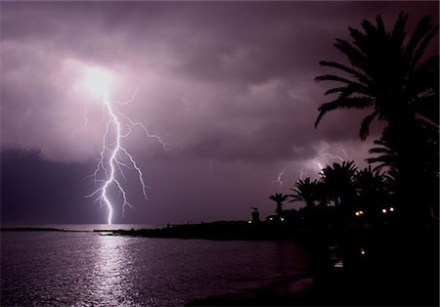
I can remember a time, when I lived in Roanoke, before I knew God, when I got caught out on the golf course during a lightning storm. Somehow, I knew instinctively that I wasn’t living a pleasing life. I was in a panic, thinking that God was going to punish me and was going to literally send a lightning bolt.

But as I think about that, I realize that is Old Testament thinking. That is what Job’s friends thought when Job was enduring the onslaught of tragedies that came his way. That was the kind of thinking his disciples wrongly had when they asked Jesus, “Who sinned, this man or his parents?” (See John 9:2) Yes, God disciplines those he loves, but he does so as a father does a son he DELIGHTS in (Proverbs 3:12, Hebrews 12:7). He does it to shape us and mold us into the image of His Son.

I have to remind myself that he desires to be merciful (Hosea 6:6, Matt 9:13) to me and you. His “default” setting is love, grace and mercy. (James 2:13) A time is coming when He will judge, because He is a holy and just God. The tragic time is coming for that. But as we seek to walk in His ways, He isn’t looking for an opportunity to scold us and punish us when we mess up. He’s not looking to send a lightning bolt.

Lastly, He is not mad at you and me. We may screw up, but He knows how we were made. He delights that we are seeking to draw close to Him. He delights that we think about Him. He delights in the fact that we are trying to walk in His ways. He is not mad at us.

The Gospel is called the Good News. It is good news for everyone. It is good news for the wayward prodigal looking to come home. It is good news for the one (like me once) who is falling off his barstool. And it is STILL good news for you and me today.

He is not mad at you. He delights in you. That is Good News.